Tag: Work!

25. Vibe Check on Social Media – Explanation Writing

Have you ever scrolled through your feed, seeing one perfectly compiled post after another, and then looked up from your phone to a quiet, empty room? I have. And in that moment, the “connected” world of social media felt like a lie. 

Kia Ora, Reader.

This week, the year 8’s and 7’s of room 9 are writing about how social media affects us humans. This blog is my attempt to find and explain the “how” and “why” behind this complex issue. I’m going to lay out the causes and effects I’ve discovered, turning this hazy, personal observation into a clear, logical explanation.

________________________________________________________________________________________________________

The good, the bad, the ugly

Yeah, the foundation of the internet is great for keeping up with your crew; It lets you send memes to your bestie across the world and celebrate wins with people you haven’t seen since kindergarten or primary school. But let’s be real, the negative stuff can hit differently. Cyber-bullying, for one, is a whole other beast. It’s not just some casual shade; it can be legit malicious and mess with people’s heads.

In my writing, I’ve been focusing on the more messed-up side of social media. The internet can be a dark place, and the algorithms aren’t helping. My whole goal isn’t to be a buzzkill, but to put things in perspective. It’s about helping people see how this stuff actually affects us and gets us all twisted up. So, this is kind of a call-out to that behavior.

Here’s what I’ve authored:

25. Explanation Writing_ How Does Social Media Affect Us

Read it!

_________________________________________________________________________________________________________

Just a heads up

This post is my take on the topic, but it comes from a place of “I get it.” This is for anyone who’s felt that weird, empty feeling after scrolling for too long, or anyone who’s been on the receiving end of online garbage. My hope is that by explaining how this behavior works, we can all maybe do better. Let me know what your thoughts are by commenting down below 👇🏾.

Nga Mihi

25. The Right (correct) Angle

Tēnā Koe, Reader!

Recently in maths, the year 8 has been focusing about the fascinating world of angles! We’re moving beyond simple measurements to truly understand their–the angles–properties and how to describe them accurately. The key to our success has been mastering the three-letter notation, like ∠ABC, which has allowed us to comprehend communicate our geometric findings. That brings me to my question.. what are you learning about in Maths? I’d be intrigued to know if I’ve learnt about something similar or not!

What’s The Deal With ∠ABC?

It all comes down to being super clear. See, when you write ∠ABC, you’re telling everyone exactly which angle you mean. The letter in the middle, B, is the pointy bit of the angle—what we call the vertex. The two letters on the ends, A and C, just show you the two lines that make the angle. It’s a great way to avoid confusion when you’ve got a bunch of lines all crossing each other.

With this new way of talking about angles, we, the Year 8’s, have become experts at spotting all the different kinds! Like:
  • Acute angles: These are the “sharp” ones, less than 90°.
  • Obtuse angles: Think of these as the “wide” angles, bigger than 90°.
  • Right angles: The classic 90° corner. Now they know to look for that little square box to spot them (like the corner of a picture frame).
  • Reflex angles: These are the big angles, the ones that are more than 180°.

Vocab Wall

During class, the students learned some new words that are great shortcuts for describing different types of angles. For example, the word “supplementary” is a quick way to talk about two angles that add up to a straight line (180 degrees)! Instead of talking about the angles that add up to or into a straight angle. Another word I’ve learnt whilst studying was complementary! ”Complementary” ANGLES are a pair of angles that sum up to a right angle (90°). They can be visualized as two pieces that fit together to form a perfect L-shaped corner.
Alternate and corresponding angles
When two parallel lines are crossed by a transversal line, the relationships between alternate and corresponding angles become apparent.
For alternate angles, I ideally think that the key word is “opposite.”. They are on opposite sides of the transversal line that crosses through two parallel lines. When the lines are parallel, these angles are always equal to each other.
In regular life, “corresponding” means something that matches up with something else. Think of two houses that are built exactly the same on a street. The window on the top-left of one house corresponds to the window on the top-left of the other. That’s the best way I could visually explain the word.
So our two other new words I’ve learnt were:
  1. Alternate Angles &
  2. Corresponding Angles.

What we’ve learned isn’t just for tests. We see angles everywhere. The right angle of a building, the acute angle of a roof, or all the different angles in a cool drawing. It’s awesome to see people using this stuff to describe the world around them. I think my understanding is great because I understood most of what I was tasked to do. We did a great job, and it’s been fun seeing us get so into it!
Thanks for reading! Comment your thoughts on this post down below 👇📝.

25. Mastering Persuasive Writing: How to Convince And Inspire

Talitali Fiefia, Reader!

🇹🇴 Faka’ofo’ofa ‘a e uike lea fakatonga! – Happy Tongan Language Week! 🇹🇴

What We’re Working On

Recently, we’ve been focusing on persuading Writing, trying to convince the readers to follow our beliefs. For this certain writing, we had to convince the teachers (or just people) on why the seniors of EHS (the year 7 & 8’s) should go to Sports Camp.

I’ve learnt the structure of persuading Writing in year 6, improving now that I’m in year 8!

If you haven’t heard of what persuading Writing is, or just don’t know what persuading means, then I’ll be glad to explain.

Persuading: induce (someone) to do something through reasoning or argument. So me convincing the teachers basically says so. I’m just converting my persuading-ness into writing so people can become convinced by my point and understand what I’m trying to induce the person into!

Glad to help.

My Product

What I’ve done so far was pretty good. I think the way I started off was strong. Let me know if I clocked it, I know there’s room for improvement for me.

Here’s what I’ve started off with:

” Did you know that 90% of the year 7 & 8’s are willing to participate in Sports Camp? “

I started off strong with that introduction because everyone likes sports camps, right?

Anyways! I hope that’s a luring-enough introduction… What are your thoughts?

25. Budgeting Income to Expenditures

Kia Ora, Reader!

Today we are learning how to use spreadsheets and income and expenditures. For Maths, the year 8 has been looking into financial planning and how it works. We’ve looked at what income and expenditure were, comprehending the usage and definition.

In the textbook, there was an equation that shows the table of Harper’s monthly budget (Harper is an example person) which shows her income, amount, then expenditure and the amount for that. Since there was a table (like with columns) that showed what she had spent.

On the other hand, we’ve learnt how to use the tools in Google Spreadsheets and creating our understanding relevant to Harper’s monthly budget.

What Her Monthly Budget Looks Like

So what we know about her, is that she’s a babysitter and has a balanced budget, since her expenditure amount is lower than her income, which basically sums up what expenditure means. Income is the amount of money you’re receiving as in like paying.

In the sheets, I’ve learnt something new.

Sharing What I’ve Learnt

As you can see in the video, I highlighted the list of the amount then clicked on a special sigma “E” looking symbol and then moved onto ‘SUM’. Clicking Sum just pretty much sums up the money In total. Clicking the enter button will allow the outcome to be shown. I find it fascinating that when I change up the numbers (with the summing still activated) it changes the total that I’ve added. Cool, right?

I hope you understood what I learnt. Any thoughts or ideas? Comment them down below.

Bye!

25. – + Filtering Water + – Gravity Filtration

Hola!

For this week’s engineering, as you can see on the title– we’ve filtered dirty brown looking water to clear water. The materials included were activated charcoal (which did the majority of the work to clear the liquid) along with some fish pebbles, gravel, coffee filter, cotton, sand, and pond water collected near the Papakura Marae, as well as a cheese cloth which was used to pour the water into the other half of the bottle.

So basically, we’ve half’ed an average water bottle (plastic), and using the Gravity filtration method– Working as a group to collect each material needed for the project. Hereby is a DLO explaining what me and my group understood from the project we’ve done, showing how we know its way to become clear.

I felt so triumphant when seeing that our water was clear, my hypothesis was correct knowing that my group has successfully done the filtration!

Thank you for reading, bye!

25. * Innovative Bridge Designs / Creations ! *

Kia Ora!

As you know, it’s Wednesday!– Well Engineering time for the year 8’s and 7’s.

It was settled out in the hall where we experienced various activities which came in the category of Civil Engineering! It was enjoyable, especially working together as a team with my friends. There, was where Ruth had presented herself and talked us through about Civil Engineering. She’s a retired teacher (I Guess) who ran the engineering day 2 class.

We started our time off with a challenge–using Jenga Blocks and seeing who could build the tallest tower compared to other groups.–There were a time limit of 3 minutes, seeing who could build an practical skyscraper! My group’s tower was not that stable. It was precarious which made the tension strong enough to knock the tower over. I had the bright idea to use the Jenga tin (there were no rules!) so we did so and others mirrored our actions. Frankly, I had tons of fun overall! Here’s what it looks like if you can’t really imagine it.

After that activity, we had another task to build a bridge. With just cardboard, the help of scissors, along with tape! It was simple really. As a group, we’ve combined our ideas together and looked up at the TV which had different types of bridges on it– which gave us the idea to combine the Arched Bridge and Cable-Stayed Bridge. I thought the idea and design seemed uniquely awesome, my group can definitely agree on that. I agree that we all have different but creative ideas.

Hereby is what our architect look like!

It can hold a Chromebook, you know. That proves how strong it is. Relying on the tension, and mainly support on the bottom, it’s a stabilized and safe bridge. Imagine it 100x the size! It’ll be able to hold heavy construction trucks, buses, you name it. Possibly a tank too.

This day might just be the best of the week, I enjoyed it because we got to do different things in a team, working together which gave me the cognitive enchantment.

Thank you for reading, Bye!

🎲 Sawdust & Success! – Our Hard Material Project! 🎲

Kia ora, Reader!

Every Monday, the year 7 and 8 students from my school travel to Papakura Intermediate for technology classes, giving us the chance to learn in a completely different environment. It’s like a mini field trip every week!

This term, I’ve been placed in the Hard Materials rotation, where we  work hands-on tools, wood and metal (etc) to design and build real projects. Take a look at what I’ve created during my time in the workshop!

Take a wild guess–what do you think I made? If you said ‘Dominoes’, give yourself a high-five because that’s exactly it!

I’ve made the dominoes by scratch, learning how to use a DRILL PRESS during the process. I used the drill press machine to make the holes in my dominoes, it’s this big machine with a lever that you pull down to lower the drill bit. The more pressure you apply, the deeper it drills into the material. Super accurate hole space if you add the same pressure every time, quite easy to use and I find it pretty satisfying to do/watch!

Of course, to keep the dominoes even, before it was all into pieces, it was this long wooden board where I added some lines 30 cm apart to even up the blocks. (It indicates where I should saw 🪚!)

The fun thing about owning these hand made dominoes is that I could play games with them! Like the main one of course, the Classic Domino Game, or use them for math challenges, especially what you’ve seen in the video I’ve added. (If you observed the video well enough, you can see that I attempted to make the number 9 which symbolizes my class room).

Took me 2 weeks to complete by the way! Practically 2 Mondays.

If you’re filled with questions or want to give me feedback, just comment down below, please!

Thank you for reading! Have a great time 🎲.

Reflection of The Week

Hi!

Here is a recount on what I’ve learnt/did throughout the week!

– Maths Comprehension – Converting Measurements

For maths, we learnt about altering measurements!

As in that saying, we learnt how to convert measurements as in MM to CM. The way I work it out is a bit complicated to others, but as long as I get the answer right, it doesn’t matter. I can’t really explain the way I do it in text, only visually. Converting measurements involves changing one unit to another white maintaining the same value. Converting cm to mm is easy, just multiply the # by ten.

  Hereby is a (DLO)/glossary about how you should work out on how to convert measurements! It’s simple, really. I understood how to convert them because this poster hung up in my classroom — which explains

Speaking about maths… do you enjoy math? Let me know! I like math.


READING:

WAR – Blog (Here’s the link to my other post which talks about what I did for reading/writing Reading

WRITING

For writing, people re-did this ice comprehension thing which was already due from last term or week 1-5. I’ve already finished writing that but for some reason others started working on it just recently from now. Here’s my post — Writing

ART

Other than writing, I’ve worked on flax weaving earlier — creating an Ika (fish), here’s the tutorial I’ve watched to make my flaxing (VIDEO).

I used plastic WrapStrap to create it instead of flaxing leaves

OTHER WORK

So every Wednesday and Thursday, Ben is our teacher instead of Whaea Lorraine. This week wasn’t the case though, Lorraine was our teacher throughout the whole week this week. Despite that, I went  to finish off Bens work – here’s one for example -We do passion projects as an practical collection of things, so in alphabetical order, this is what I’ve done for D (since I’m done A, B & C)

In these Passion Projects, we find a topic and choose one specific thing that comes from it. So you can see I chose Food/Dessert and out of every food, I chose to research things or facts about Dango’s.

I picked to show you this piece of work in the Passion Project category because it was the one I recently finished.

Thank you for reading, I’m quite pleased with my mahi!

Bye!

25. New Words !

Hello, Reader!

WALT: UNDERSTAND HOMONYMS AND IT’S MEANING

I’ve learnt what a homonym is and it’s meaning is simple: It means when there’s words that has different meanings but the same pronunciation which could potentially mistake a person to use it for different purposes. For example: Pear, peer, pare, and pair – may sound the same, but really they have different meanings. Someone could mistake using the work ‘pair’ even thought they’re trying to say ‘pear’. Like “I ate a pair”. It doesn’t make sense, but you can understand why they made the mistake.

I didn’t have time to make a DLO (personal reasons) but I made one for the meaning of “RECIPROCITY” which is another new word that I learnt other than homonym.

RECIPROCITY:

Thanks for reading.

Bye!

25. My recent Insights ! – T2 W2

Kia Ora, Reader!

I’ve learnt MANY things this week and I’m fascinated to tell you what I’ve recently acknowledged.

So the subject I learnt a lot in was maths– so I’ll be talking about maths first then writing as well as reading afterwards.

In math’s the year 8’s main focus was ‘Prisms and Nets’ which is 3 dimensional shapes and what they look like unfolded to become a net. I’ve learnt what a prism is and what their purpose serves. It was actually quite exciting knowing new things about geometry which I wanna do more about since shapes are actually something that interest me in mathematical terms. I already knew what a net is– like the basics, it’s like a template of a three dimensional shape, but I never knew its full meaning. I used to make cube nets when I was younger because I was a bored kid, which is why I feel familiar with half of this topic.

Anyways, nets are simple. Prisms on the other hand were quite tuff. We did a deep research about it since the majority of the year 8’s didn’t quite know about prism shapes and the names for certain ones like rectangular prisms and so on. Ever since my teacher taught us about “vertices”, “edges” and “faces” I felt like Albert Einstein!

Vertices are the points (or corners) of a 3D shape, I’d explain more- so here’s my DLO down below about my understanding of the main property points:

HOPE THIS IS A GOOD EXAMPLE!!!

The New Words I Learnt in Maths

I also learnt about new shapes (prisms) like this weird one called a “Oblique Rectangular Prism”. The meaning of oblique: (Something that isn’t exactly straight or isn’t 90 degrees). That’s what I’ve learnt. So if you already know what a “Rectangular Prism” looks like (like the tall standing one), just imagine a slightly bent version of it- yeah? Like since a RECTANGULAR PRISM IS ninety degrees, but the oblique model isn’t, the best way to know what a Oblique Rectangular Prism is- is to imagine it parallel to the right.  (or simply Google it)

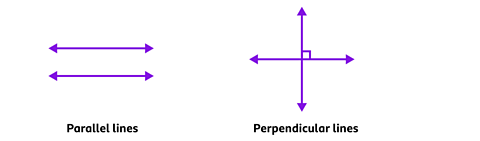
Another mathematical word we’ve learnt was Parallel and Perpendicular. Perpendicular means something that has two straight lines which has a 90 degrees angle (like the corner of a picture frame) and Parallel is when two lines are equally aligned together especially in whatever direction they’re facing. Example down below.

Parallel and perpendicular lines - KS2 Maths - Year 3 - BBC Bitesize
I’ve seen a tad progression in my knowledge of geometry – like I used to be down there now I’m reaching the roof. I feel triumphantly proud of myself kinda.

Thank you for reading, God bless xx.


Nga Mihi – Trinity